

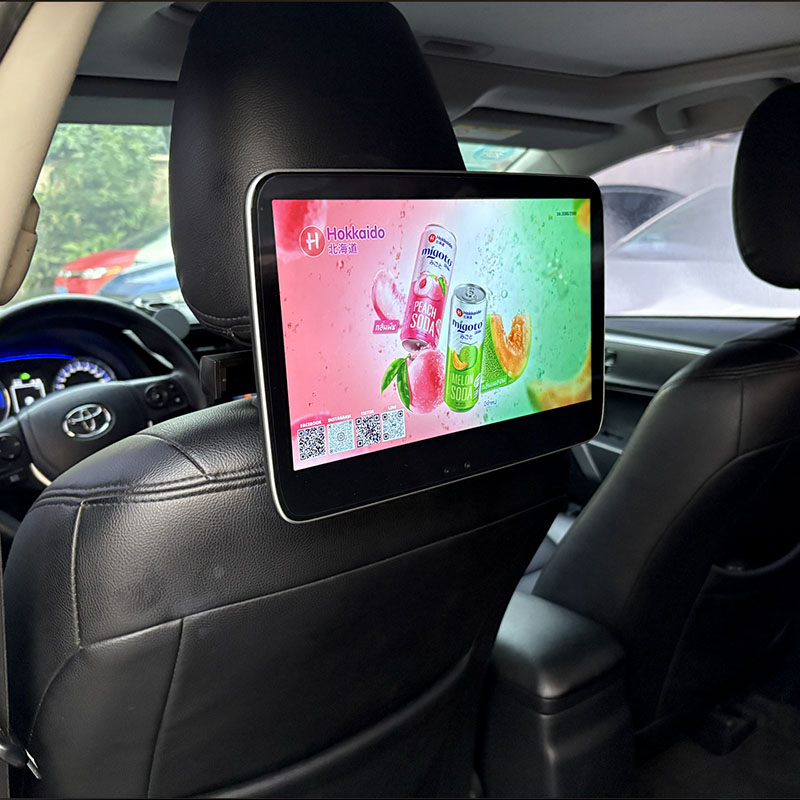
Why 4G Positioning Is the Best Choice for Taxi Advertising Displays: 7 Reasons Fleet Operators Prefer It
As digital out-of-home (DOOH) advertising continues to evolve, more transportation companies are investing in taxi advertising displays to create new revenue opportunities and deliver targeted advertising campaigns. One of the most common questions from buyers is whether GPS positioning is necessary or if 4G positioning can achieve the same advertising objectives.
While GPS technology offers excellent accuracy for vehicle tracking, many fleet operators have discovered that 4G positioning is a more practical and cost-effective solution for location-based advertising. Instead of paying for additional GPS hardware, continuous mobile data transmission, and reverse geocoding services, operators can use existing 4G communication modules to identify advertising zones and automatically switch content.
In this article, we’ll explain why 4G positioning has become the preferred solution for modern taxi advertising displays and how it helps reduce costs while maintaining outstanding advertising performance.
Why Positioning Matters in Taxi Advertising
Location awareness allows a taxi advertising display to automatically play different advertisements when a vehicle enters a predefined commercial area. Instead of showing identical advertisements throughout an entire journey, the display can present promotions that match the passenger’s surroundings, increasing engagement and improving advertising effectiveness.
For example, a taxi arriving at an airport can display hotel and airline promotions, while the same vehicle entering a shopping district can immediately switch to advertisements for restaurants, fashion brands, or entertainment venues. This intelligent scheduling improves campaign relevance without requiring continuous GPS tracking.
Reason 1: Lower Hardware Costs
GPS positioning requires dedicated hardware, including GPS receivers and antennas. These components increase manufacturing costs and installation complexity.
By comparison, most taxi digital signage systems already include a 4G communication module for CMS connectivity. The same module can also estimate the vehicle’s location through nearby cellular base stations, eliminating the need for additional GPS hardware.
For large fleets deploying hundreds or thousands of displays, the savings can be substantial.
Reason 2: Reduced Mobile Data Usage
Real-time GPS tracking continuously uploads location information to the server, consuming significant mobile data and increasing operating costs. Every location update must also be processed by the CMS.
With 4G positioning, the advertising display only needs to determine whether it has entered a predefined advertising zone. Because most of the processing occurs locally, mobile data consumption remains extremely low.
This makes 4G positioning particularly attractive for operators managing large advertising networks.
Reason 3: Lower CMS Operating Costs
GPS tracking requires powerful cloud servers capable of handling frequent location updates, route histories, and reverse geocoding requests.
A 4G-based taxi advertising system significantly reduces server workload because advertising decisions are made on the device itself rather than in the cloud. As a result, businesses spend less on server infrastructure, maintenance, and API services.
Reason 4: Perfect for Geofencing Applications
Geofencing does not require meter-level positioning accuracy. Instead, the system only needs to recognize whether a taxi has entered a predefined commercial zone.
Since 4G positioning can reliably identify airports, shopping malls, business districts, universities, and tourist attractions, it provides more than enough accuracy for most advertising campaigns.
This is why many operators choose 4G positioning for taxi headrest advertising displays instead of investing in more expensive GPS solutions.
Reason 5: Faster Installation and Easier Maintenance
Because no external GPS antenna or additional wiring is required, installing a 4G positioning solution is faster and simpler. Maintenance is also easier because there are fewer hardware components that could fail.
This reduces deployment time and allows fleets to begin generating advertising revenue much sooner.
Reason 6: Higher Return on Investment
Lower hardware costs, reduced data usage, and simplified CMS architecture all contribute to a lower total cost of ownership. Fleet operators can allocate more of their budget toward advertising sales instead of technology maintenance.
For most commercial projects, this translates into a faster return on investment and improved profitability.
Reason 7: Trusted by Fleet Operators Worldwide
Many fleet operators and advertising companies have adopted 4G positioning because it balances functionality, affordability, and reliability. It supports intelligent content scheduling, location-based advertising, and remote management without the complexity of full-scale GPS tracking.
As a result, 4G positioning has become one of the most widely deployed technologies in modern taxi advertising displays.
GPS vs 4G at a Glance
| Feature | GPS | 4G Positioning |
|---|---|---|
| Additional Hardware | Required | Not Required |
| Installation Cost | Higher | Lower |
| Mobile Data Usage | High | Low |
| CMS Workload | Heavy | Light |
| Geofencing Support | Excellent | Excellent |
| Real-Time Tracking | Yes | Limited |
| Advertising ROI | Good | Excellent |
Related Articles
- How to Choose the Best Positioning Solution for Taxi Headrest Advertising Displays
- GPS vs 4G Positioning for Taxi Digital Signage
- How Geofencing Improves Taxi Advertising ROI
External Resources
Frequently Asked Questions
Is 4G positioning accurate enough for taxi advertising?
Yes. For geofencing and location-based advertising, 4G positioning provides sufficient accuracy while keeping costs low.
Does 4G positioning require additional hardware?
No. Most taxi advertising displays already include a 4G communication module, eliminating the need for dedicated GPS hardware.
Can I still use GPS if I need real-time vehicle tracking?
Yes. GPS is recommended when your project requires continuous vehicle monitoring and historical route playback.
Which positioning method offers the best ROI?
For advertising-focused projects, 4G positioning generally provides the best balance between cost, functionality, and long-term operating expenses.
Contact Us
Looking for a professional Taxi Advertising Display manufacturer? We provide customized taxi digital signage solutions with intelligent 4G positioning, remote CMS management, and location-based advertising features for fleets worldwide.
WhatsApp: +86 13422871594
Email: kiki@donghebao.com