

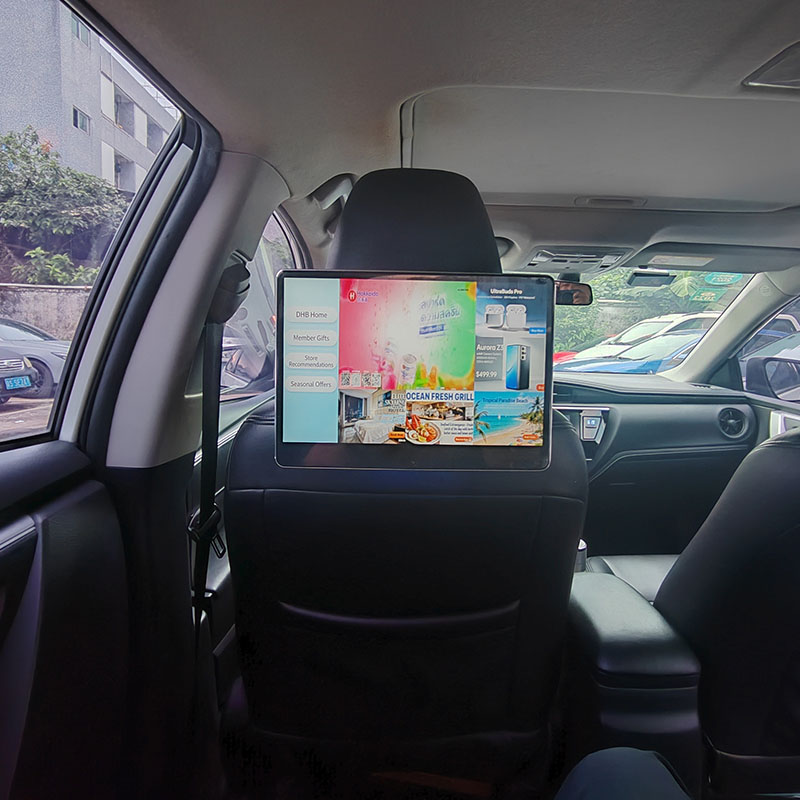
How Geofencing Improves Taxi Advertising ROI: A Complete Guide for Taxi Advertising Screens
Digital Out-of-Home (DOOH) advertising has changed dramatically over the past decade, and one of the biggest innovations is the use of geofencing. Instead of displaying the same advertisement to every passenger throughout the day, a modern taxi advertising screen can automatically play different advertising campaigns based on the vehicle’s location.
For advertisers, this means more relevant campaigns, better audience engagement, and higher advertising return on investment (ROI). For fleet operators, geofencing creates additional advertising opportunities without increasing hardware costs. As a result, geofencing has become one of the most valuable features of today’s taxi digital signage solutions.
What Is Geofencing?
Geofencing is a location-based technology that creates virtual geographic boundaries around specific areas. When a taxi enters or leaves one of these predefined zones, the taxi advertising display automatically switches to a designated advertising playlist.
Unlike traditional GPS tracking, geofencing does not require continuous monitoring of every vehicle. The advertising device only needs to recognize whether it has entered a target area, making it a highly efficient solution for digital signage for taxi.
How Does Geofencing Work?
A fleet operator first defines advertising zones inside the CMS, such as airports, shopping malls, business districts, universities, hospitals, tourist attractions, or railway stations. Each zone is associated with one or more advertising campaigns.
When the taxi approaches one of these locations, the taxi passenger screen detects that it has entered the predefined area and immediately switches to the assigned advertisements. Since the decision is processed locally by the device, there is no need to continuously upload location information to the CMS.
This approach significantly reduces mobile data consumption while ensuring passengers always see advertisements that match their current surroundings.
6 Ways Geofencing Improves Advertising ROI
1. Deliver More Relevant Advertisements
Passengers are more likely to engage with advertisements that relate to their current location. A traveler arriving at an airport is naturally more interested in hotels, airlines, travel insurance, or airport parking than advertisements for local supermarkets.
2. Increase Advertisement Conversion Rates
Relevant advertising increases customer attention and improves conversion rates. Businesses can target audiences when they are most likely to purchase products or services nearby.
3. Reduce Advertising Waste
Instead of showing every advertisement everywhere, advertisers only pay for campaigns displayed in selected locations, improving campaign efficiency.
4. Lower Operating Costs
Unlike continuous GPS tracking, geofencing works efficiently with 4G base station positioning, eliminating expensive GPS hardware and reducing mobile data usage.
5. Improve Campaign Flexibility
Advertising schedules can be updated remotely through the CMS. Different campaigns can be assigned to different districts without replacing media files manually.
6. Increase Revenue for Fleet Operators
Because advertising inventory can be sold by geographic location, fleet operators can offer premium advertising packages for airports, commercial centers, exhibition venues, and tourist destinations.
Real-World Applications
| Location | Recommended Advertisements |
|---|---|
| Airport | Hotels, Airlines, Travel Insurance, Currency Exchange |
| Shopping Mall | Retail Stores, Restaurants, Luxury Brands |
| Business District | Financial Services, Office Leasing, Business Hotels |
| University | Education, Online Courses, Electronics |
| Hospital | Healthcare, Pharmacies, Insurance |
| Tourist Attraction | Local Tours, Museums, Restaurants, Souvenirs |
Why 4G Positioning Is Recommended
Many customers assume GPS is required for geofencing, but this is not always true. For most taxi advertising systems, 4G base station positioning provides sufficient accuracy for identifying commercial areas while keeping deployment and operating costs low.
By avoiding dedicated GPS hardware and reducing reverse geocoding requests, 4G positioning delivers an excellent balance between performance and affordability. This is why many taxi advertising operators worldwide choose 4G positioning for their taxi headrest advertising display projects.
Related Articles
- How to Choose the Best Positioning Solution for Taxi Headrest Advertising Displays
- GPS vs 4G Positioning for Taxi Digital Signage
- Taxi Headrest Advertising Display Solutions
Frequently Asked Questions
Does geofencing require GPS?
No. Many taxi advertising systems can use 4G base station positioning for geofencing, which is more cost-effective for location-based advertising.
Is geofencing suitable for taxi advertising?
Yes. Geofencing allows advertisements to change automatically based on location, improving relevance and advertising ROI.
Can geofencing reduce operating costs?
Yes. Compared with continuous GPS tracking, geofencing requires less mobile data and lower server resources.
Can advertising zones be modified remotely?
Yes. Most professional CMS platforms allow administrators to update geofencing zones and advertising playlists remotely.
Contact Us
Looking for a reliable Taxi Advertising Screen or a customized Taxi Digital Signage solution? Our engineering team can help you build a cost-effective advertising system with intelligent geofencing features.
WhatsApp: +86 13422871594
Email: kiki@donghebao.com