

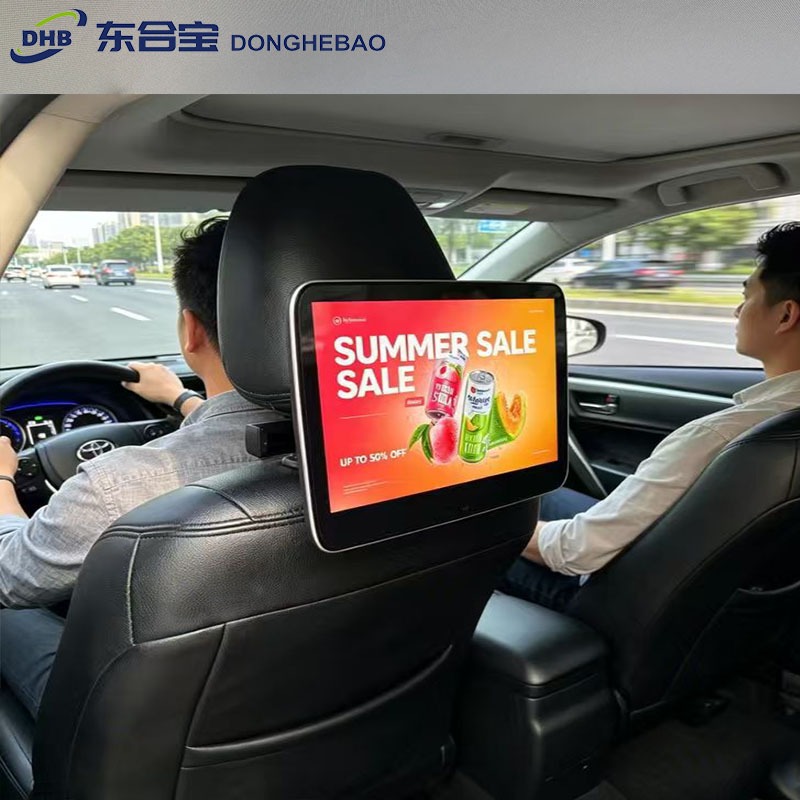
Buying a taxi rear seat display is not just about the spec sheet. What matters more is how the unit behaves in a running vehicle every day. Passengers glance at the screen for only a few seconds. They do this in bright daylight and at night, while the car is moving. A good unit works quietly in the background. It turns on with the car and plays the right content. No driver ever needs to touch it. This guide covers the checks that matter before you order. In this way, you can compare options on equal terms.
What to Check Before You Buy a Taxi Rear Seat Display
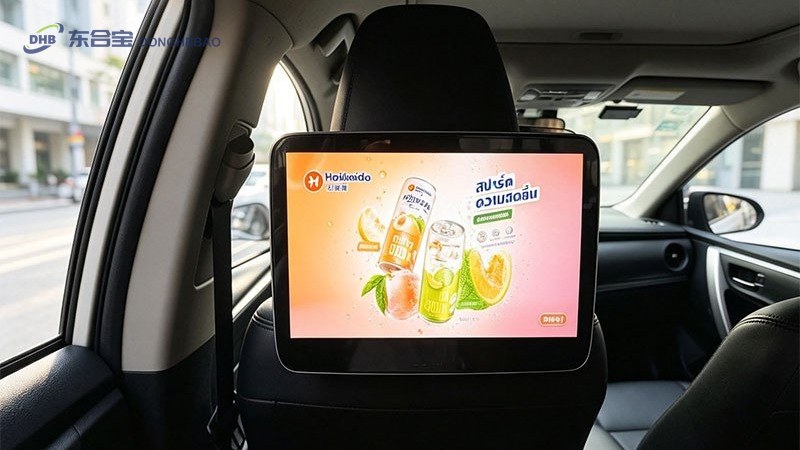
Taxi Rear Seat Display: Screen Size and Viewing Angle
Rear passengers sit at different distances and angles, so a screen that looks sharp from the driver’s seat may be hard to read from the curb side. Check the viewing angle rating and, if possible, view a sample from each rear seat. A panel with wide viewing angles keeps text and images legible without forcing passengers to lean forward. Resolution matters too. However, a sharp panel with good angles usually beats a high-resolution panel that washes out off-axis.
Brightness That Adapts to Real Conditions
A vehicle interior can swing from direct sun to a dark garage in seconds. Fixed-brightness screens are either unreadable at noon or uncomfortably bright at night. Look for a taxi rear seat display with an ambient light sensor. This adjusts screen output to the surrounding light automatically. This not only improves readability but also reduces power draw and extends the life of the backlight. Ask the supplier to demonstrate the sensor rather than relying on a written specification.
CMS Control and How Fast It Starts
The screen is only as useful as the content system behind it. First, confirm the unit connects to a CMS you can operate. Can you upload new creatives and schedule playback by time of day? Can you push updates to the whole fleet remotely? Equally important is startup behaviour. A taxi rear seat display that boots slowly or waits for a manual login shows blank screens at the start of every shift. Check that the unit powers on with the vehicle and reaches the CMS without delay. Passengers then see content from the first minute.
Mounting, Cables and Interior Fit
Headrest and seatback mounts come in several shapes, and not every bracket fits every seat. Verify the mounting option for your exact vehicle models before ordering. Also ask how the cables are routed. They should stay hidden and clear of the seat mechanism. A clean installation protects both the product and the resale value of the vehicle. If you run mixed fleets, confirm that one taxi rear seat display platform can be adapted with different brackets rather than buying separate models for each car.
Power and Long-Term Reliability
Automotive power is noisy: voltage dips during cranking and spikes when other systems switch. Ask how the unit handles these conditions. Also check whether it supports safe start-stop behaviour. A taxi rear seat display that resets every time the engine restarts will interrupt playback and annoy passengers. Also check what happens when power is cut and restored—good units resume the correct content automatically. These details rarely appear in marketing material but decide whether a fleet deployment succeeds over months of daily use.
Functional Analysis and Customization Options
Beyond playback, many buyers want the unit to blend into their brand. Common options include a custom boot logo, a custom startup animation, and a tailored user interface. Operationally, teams often request that the Android navigation bar be hidden so passengers cannot exit the playback app. Depending on the hardware platform, the unit can also add an ambient light sensor, a presence sensor, a microphone and a camera, opening use cases from viewership counting to interactive content. Confirm which of these are standard on a taxi rear seat display and which require hardware changes.
Technical Support and CMS Adaptation
No two fleets use the same content workflow. If you already run your own CMS, check the supplier support. They should adapt the unit to your system, not force you to change platforms. Ask what integration support is included, how firmware updates are delivered, and how quickly problems are answered. A responsive supplier is worth more than a slightly lower price. This is true when devices are installed across many vehicles. For a deeper look at available hardware options, see our taxi headrest advertising display customization guide, and for broader industry context see this overview of digital signage.
Final Thoughts on Choosing a Taxi Rear Seat Display
The right taxi rear seat display fits your vehicles and workflow. It also fits your support capacity, not just your screen-size preference. Work through the checks above with each supplier. Ask for live demonstrations and compare the answers side by side. A little diligence at the buying stage prevents a lot of field issues later. If you need help matching a display to your fleet, contact the DHB team. We can walk through these points with real hardware.
Contact DHB
If you need technical support, IoT SIM card compatibility information, or customized taxi Android headrest advertising display solutions, please contact DHB.
WhatsApp: +86 134 2287 1594
Email: kiki@donghebao.com
Contact Us: Contact DHB Taxi Ad | Get Taxi Advertising Displays Quote
Website: www.dhbtaxiad.com